What CBD Won't Do (And Why I Keep Buying It Anyway)
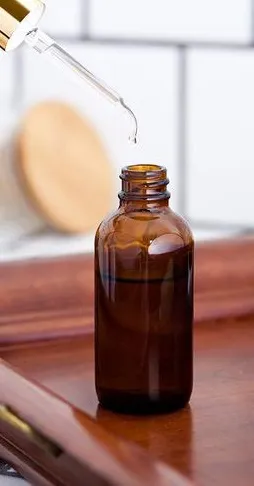
Photo: Ohiamjk, CC BY-SA 4.0, via Wikimedia Commons
There's a particular sort of CBD advert that makes me put the kettle on and walk away from my laptop. You know the type: a dropper bottle floating against a sunrise, a paragraph about transformation, and a general air of someone promising to fix your entire life for £44.99. I've been browsing British CBD shelves, both real and digital, for long enough to find it quietly hilarious — and quietly unhelpful.
So here's my small act of rebellion: a list of things CBD won't do. Not because I'm down on the stuff. Quite the opposite. I buy it, I use it, I like the ritual of it. But the reason I keep coming back isn't the hype. It's the fact that the honest end of the market has stopped pretending.
The label that promised the world
Most of the wilder claims have quietly disappeared from UK packaging, and not out of politeness. Regulations don't allow CBD products to be sold with claims that they treat, cure or prevent anything, and the advertising watchdog has taken a dim view of the brands that tried. What's left is a strange halfway house: companies that can't say much, but still imply an awful lot through soft-focus photography and phrases like "wellness journey".
That gap between what's said and what's suggested is where most disappointment gets born. So let's fill it in properly, in plain English, over a brew.
One: it won't cure anything that needs a professional
This is the big one, and it deserves saying without a hedge. CBD is not a medicine in the UK, it isn't licensed as one, and it shouldn't be standing in for actual healthcare. If something is genuinely wrong — a persistent ache, a low mood that's stretched into weeks, a sleep problem that's become a personality — the answer is a GP, not a bigger bottle.
I've watched friends spend three months and a small fortune on drops before eventually mentioning the thing to their doctor. Every one of them said the same afterwards: they wished they'd gone first and experimented second. That's not a knock on CBD. It's just an argument for putting things in the right order.
Two: it won't work before your tea goes cold
CBD isn't a switch. It doesn't arrive with a flourish and switch the lights down. Most people I've spoken to describe something far more subtle — a slight loosening, a bit more room around the edges of an anxious afternoon — and they usually notice it after consistent use rather than on day one.
That's a genuinely small thing to ask of anyone in 2026, when everything is designed to feel instant. But it's also why the first bottle is such a strange test. If you judge a plant extract on a single Tuesday evening, you'll almost certainly conclude it did nothing, and you'll probably be right — you just haven't given it a fair hearing.
The fairer test is a fortnight of the same small amount, a note or two in a phone, and a bit of patience. Which is, admittedly, an unglamorous pitch for a product. But it's an accurate one.
Three: it won't be your evening, your walk or your bedtime
Here's the one that marketing rarely touches. The pleasant part of a CBD routine is rarely the CBD alone. It's the four minutes you spend at the kitchen counter, kettle on, measuring a few drops while nobody needs anything from you. It's the bottle in your coat pocket that reminds you to step outside at lunchtime. It's the reason to close the laptop at half nine.
Take the drops out of that and you're left with a slightly odd-tasting oil in a small brown bottle. The ritual is doing more work than anyone likes to admit. That's quietly good news, because rituals are cheap, portable and entirely yours — and they work whether or not the bottle is running low.
Why limits actually make for better shopping
A brand that tells you what its product won't do is a brand that has thought about its product. That sounds trite, but it's been the most reliable filter I've found. Ask yourself three questions in front of any shelf or product page:
- Does the wording stay inside what's legally and honestly sayable?
- Is the amount of CBD per drop or per ml written clearly, not buried?
- Can I see a batch test, or at least a straightforward explanation of how the product has been checked?
The answers tell you far more than any sunrise photograph. A company that's comfortable saying "this is a supplement, here's exactly what's in it, here's what we can't claim" has nothing to hide. A company that implies everything and specifies nothing is selling vibes, not oil.
In the UK, the Food Standards Agency's public list of authorised novel foods is worth a look before you spend anything. It takes two minutes, it isn't glamorous, and it has saved me from more than one beautifully packaged mistake.
What I actually expect from a bottle
Lowered expectations get a bad reputation. In this corner of the wellness world, they're a feature. What I hope for from a decent CBD product is modest and specific: a pleasant, unremarkable few minutes in my day; a slightly softer landing after a tense one; and absolutely no surprises in the small print. That's it. No transformation, no before-and-after, no dramatic testimonial from a man called Dan who says it changed his life on a Tuesday.
And here's the strange part — the modest version has been far more satisfying. Because when nothing is overpromised, nothing disappoints. You notice the small good things rather than mourning a miracle that was never on offer.
The quiet conclusion
The honest limits of CBD aren't a weakness in the category. They're the clearest signal we have about which brands deserve your money. Three things it won't do, then: it won't replace your doctor, it won't work on your schedule, and it won't do the work of a good evening routine.
What's left after that is small, real and rather lovely — a few drops, a few minutes, a slightly calmer corner of an ordinary British day. That's the whole promise. Frankly, it's enough.